Infor VISUAL ERP is a go-to choice for manufacturers who need a production-centric system that supports scheduling, job costing, and shop floor control. But in today’s digital manufacturing environment, your ERP can’t operate in a vacuum. To stay competitive, VISUAL needs to be tightly connected to the rest of your business—especially CRM, eCommerce, and reporting tools.
When these systems don’t talk to each other, your teams are stuck duplicating data, working in silos, and making decisions based on lagging or incomplete information. Integration isn’t just a “nice to have” anymore—it’s a core strategy for getting more value from the ERP you already own.
Why Integration Matters for VISUAL Users
Many VISUAL environments were implemented years ago and haven’t evolved alongside the rest of the business. Here’s where disconnected systems typically cause pain:
- Sales and customer service teams can’t see real-time inventory or order status in their CRM
- Finance is re-entering invoice or shipment data into QuickBooks or another system
- Operations are managing scheduling or production with spreadsheets or bolt-on tools
- IT is supporting manual processes or maintaining costly custom scripts
Each of these scenarios chip away at your ROI—and they’re all solvable with smart, strategic integration.
What Should VISUAL Be Integrated With?
Every manufacturer’s environment is different, but these are some of the most common (and high-ROI) VISUAL integration points:
CRM Systems
CRM platforms like Salesforce, HubSpot, or Microsoft Dynamics CE hold your customer pipeline and service data. But without ERP integration, reps can’t answer basic customer questions without calling someone in operations. Integrating CRM with VISUAL gives your sales team real-time access to:
- Order status
- Inventory availability
- Pricing and discounts
- Quote history
- Invoices and payments
This reduces lag, improves customer experience, and shortens the sales cycle.
eCommerce Platforms
If you’re selling via Shopify, Magento, or another online storefront, integration ensures inventory, pricing, and fulfillment data stays in sync. Orders flow directly into VISUAL, cutting out manual entry and reducing fulfillment errors.
Business Intelligence & Reporting Tools
If you’re using Power BI, Tableau, or even Excel Power Query for reporting, integrating VISUAL data sources allows for real-time dashboards and analytics—helping leadership make better, faster decisions.
Common Challenges with ERP Integration
Integrating ERP isn’t always simple—especially if you’re relying on legacy tools or trying to build one-off connections internally. Here are some challenges manufacturers run into:
- Custom code that breaks during upgrades
- Multiple versions of the truth across departments
- Delayed data syncs that make information stale
- High costs of custom development and maintenance
- Security risks from unvetted connections
That’s why many manufacturers turn to managed integration platforms—pre-built connectors that eliminate the risk and reduce internal burden.
A Proven Integration Option: Unity for VISUAL ERP
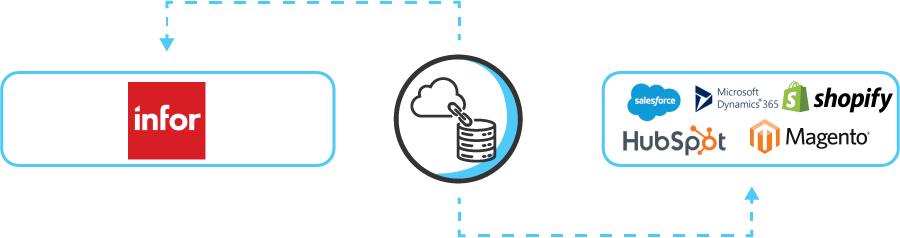
Unity is a pre-built integration platform developed specifically for manufacturers using Infor VISUAL. It connects VISUAL to CRM, eCommerce, and marketing systems without requiring custom coding or IT involvement.
Key benefits include:
- Out-of-the-box mappings for quotes, orders, parts, invoices, and more
- Support for multiple systems including Salesforce, HubSpot, Shopify, and Microsoft Dynamics CE
- Scheduled and real-time data syncs to keep every team aligned
- Secure, cloud-hosted architecture with minimal infrastructure needs
- Expert support and regular updates included with the platform
Unity is designed to make ERP integration easier and more sustainable—especially for manufacturers who can’t afford downtime or resource strain.
Integration Isn’t a Trend—It’s a Multiplier
Integrating Infor VISUAL with your other business systems doesn’t just make processes smoother—it unlocks new value from the software you’ve already invested in. You’ll reduce duplicate effort, improve customer service, shorten lead times, and give your leadership team better visibility into what’s really happening across the organization.
Whether you’re starting with CRM or building a broader digital transformation roadmap, integration is the foundation of a more connected, data-driven operation.